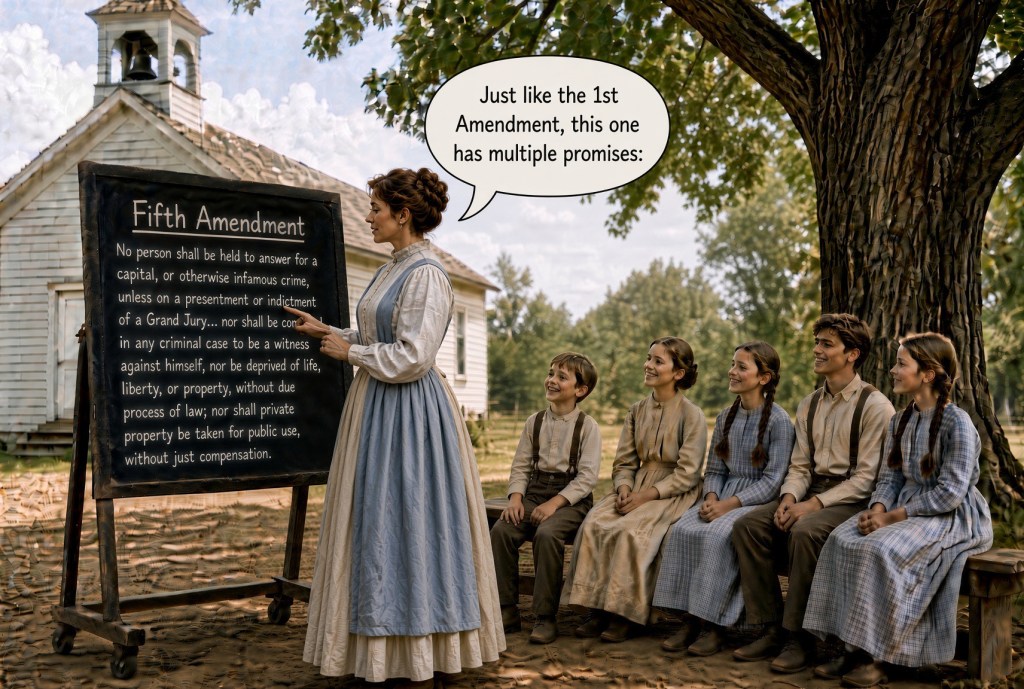
In a criminal case you cannot be forced to testify against yourself. That is the clause people mean when they “take the Fifth.” The state must prove its case with its own evidence. It cannot put you on the stand and make you supply the missing pieces.
You cannot be tried twice by the same sovereign for the same offense after you have already been acquitted or convicted. The government gets one fair shot. It does not get to keep retrying you until it likes the result.
For a capital crime or another “infamous” felony, the government generally cannot put you on trial unless a grand jury first says there is enough evidence to charge you. That is a check on a prosecutor acting alone. The amendment carves out the military and militia when they are actually in service in war or public danger; those cases can follow military process instead.
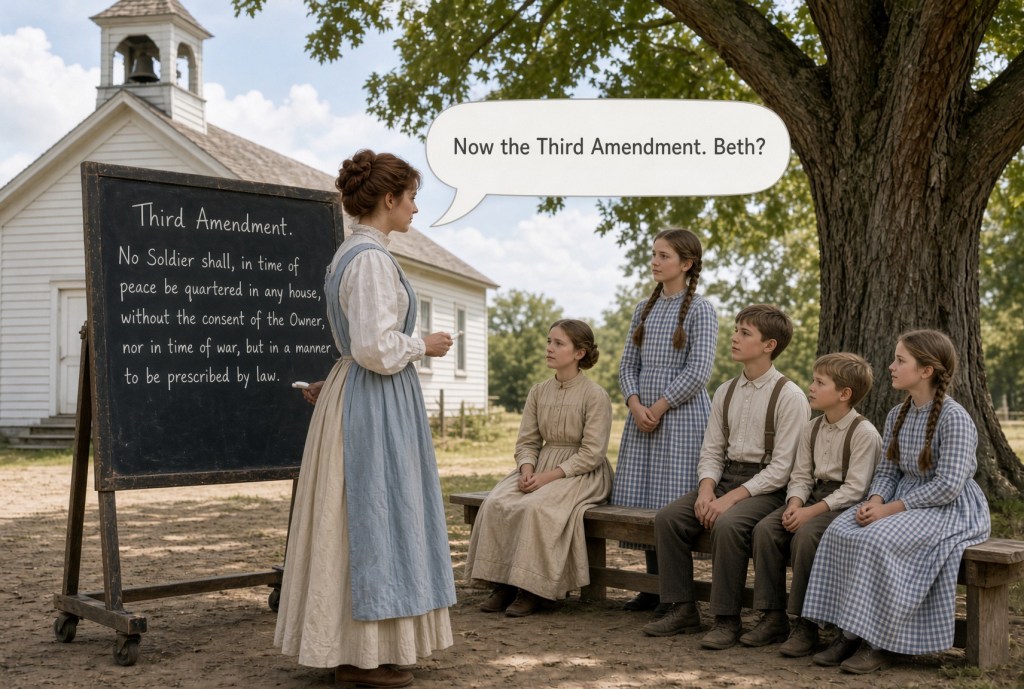
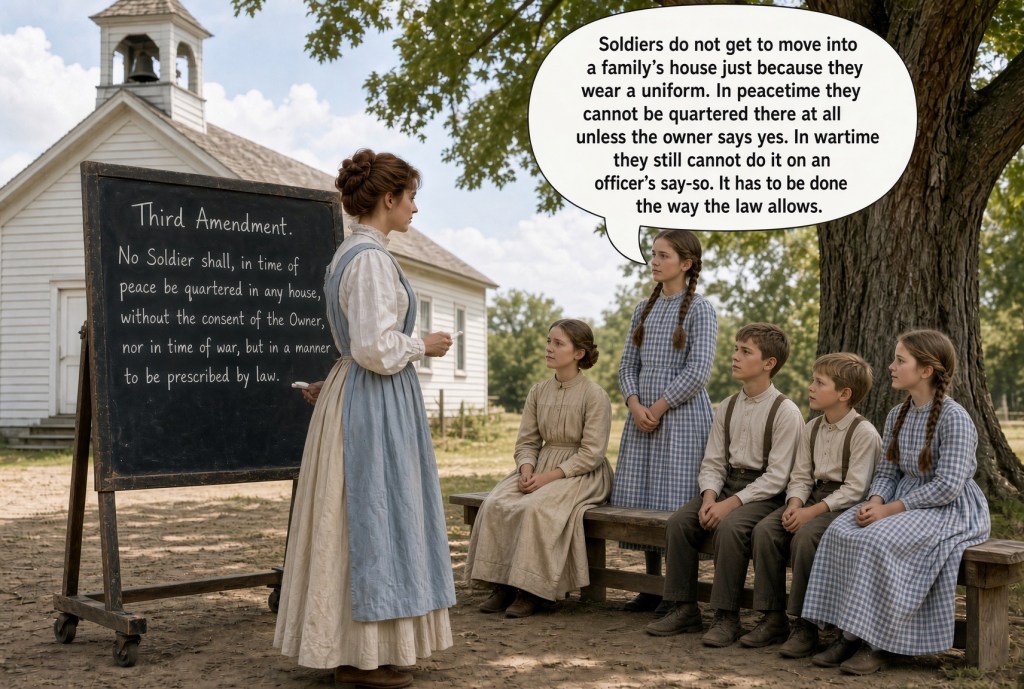
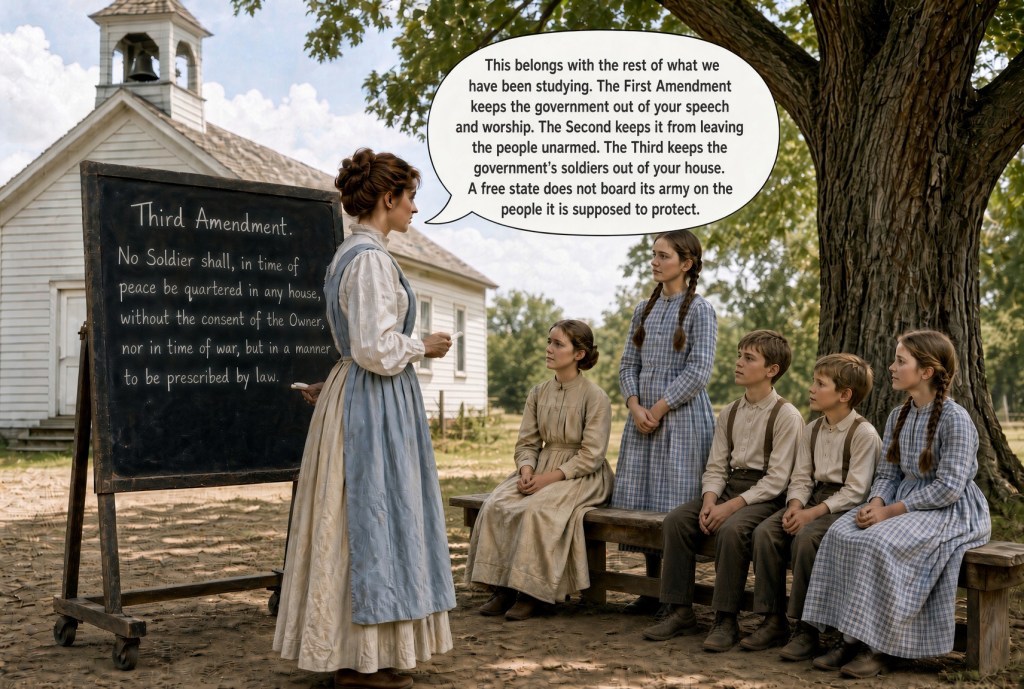
This comes from the old British practice of putting troops in private homes. The colonists treated it as both a tax and an occupation: you fed the king’s men and lost the privacy of your own roof. The Third Amendment says the army lives in barracks and camps, not in the parlor.
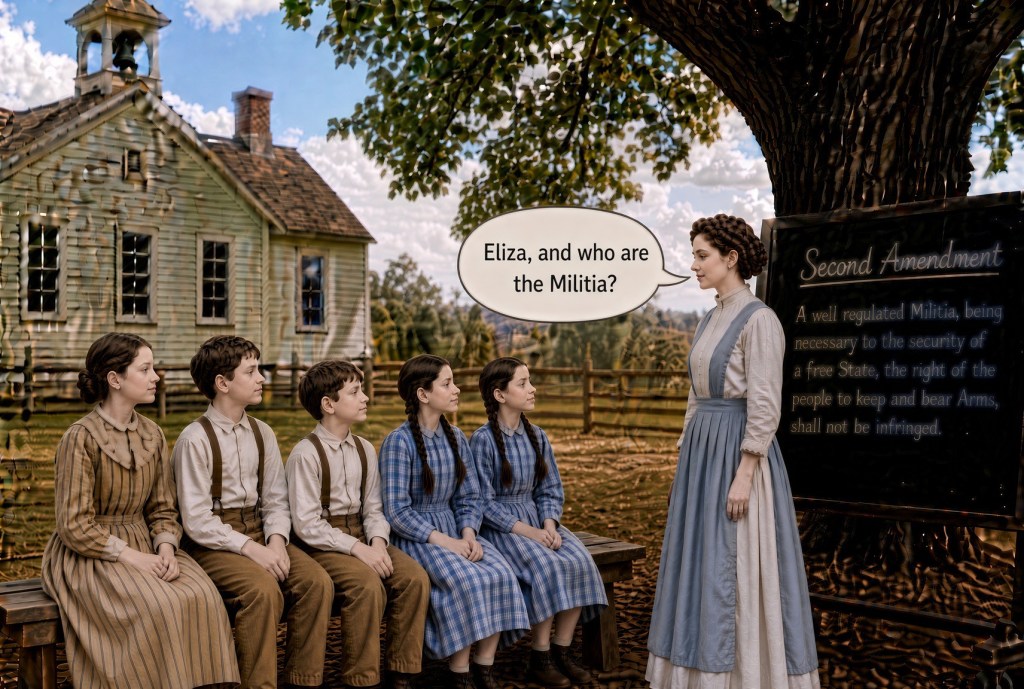
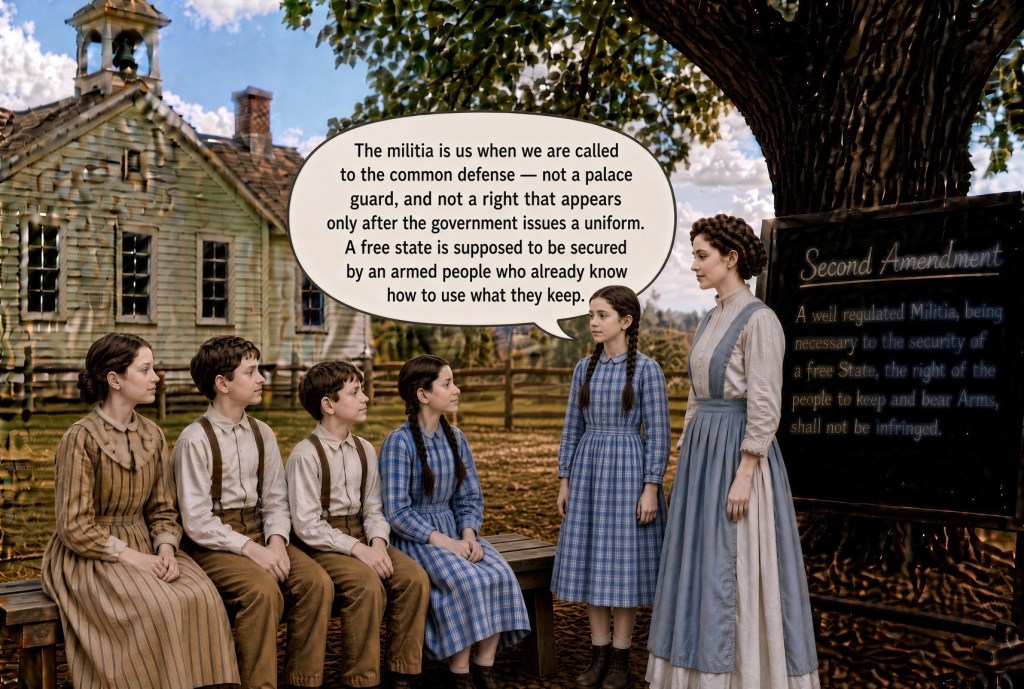
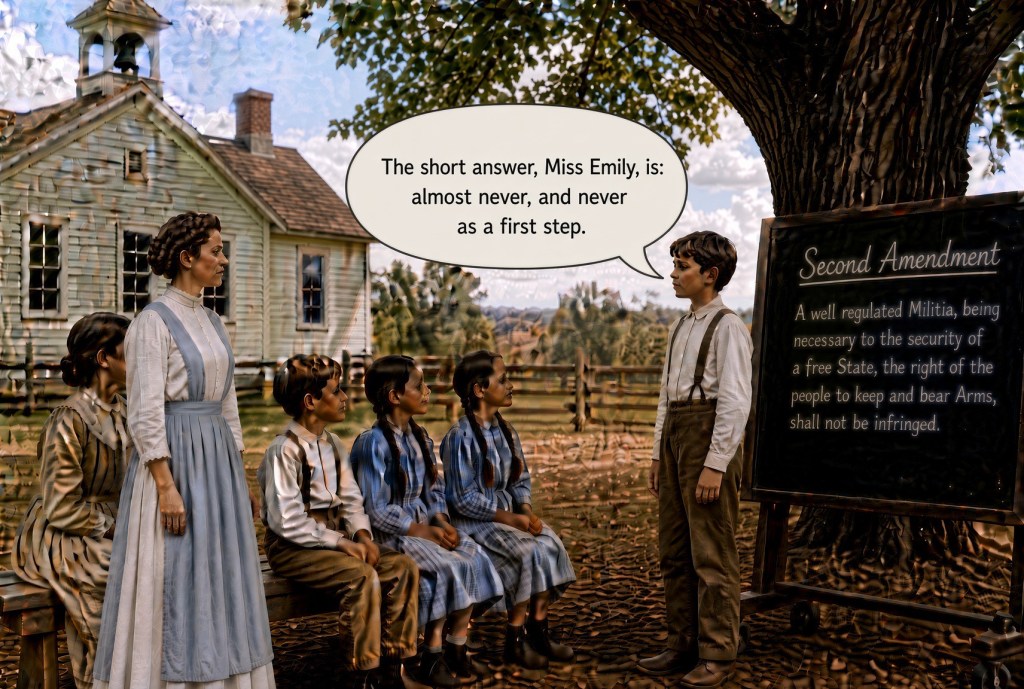
In the Second Amendment’s own world, the militia is the people who can fight, not a separate government corps.
In 1791 that meant the able-bodied citizenry — ordinary men expected to keep a working firearm and turn out if the community or the country were attacked. It was the opposite of a standing army: no permanent professional force living apart from the public, paid and housed by the state, and answerable only to officers in a capital. The Founders had just fought that kind of army.
Congress said so in law a year later. The Militia Act of 1792 enrolled the militia as the male citizen body of military age and required them to provide their own arms. That is the historical picture behind “a well regulated Militia.” “Well regulated” meant trained and orderly — able to form ranks — not “kept on a short leash by statutes until it barely exists.”
There was also a narrower idea of a select militia: a smaller, more drilled part of that same body. The amendment’s wording does not limit the right to that smaller group. It says the right of the people to keep and bear arms. The militia clause is the reason. The people are the militia in reserve.
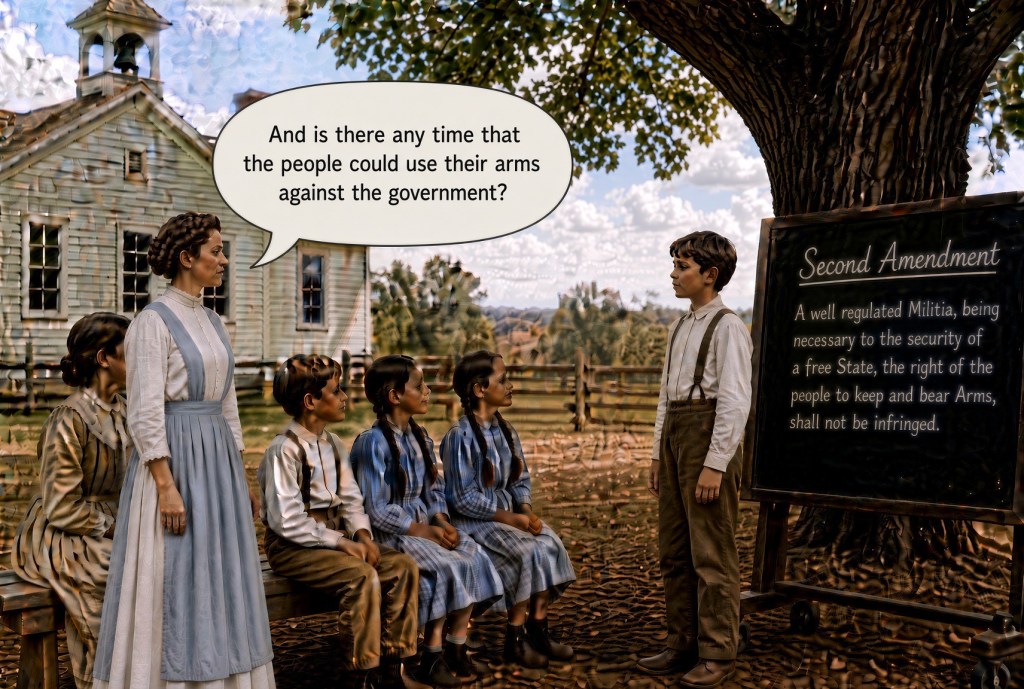
The Constitution was written so those peaceful remedies would exist: speech, press, assembly, petition, juries, elections, and divided powers. If those still work, using arms against the government is not “the militia.” It is a riot or a rebellion, and the law treats it that way.
What the Second Amendment does assume is this: a free people are not supposed to be helpless if a government ever tries to become their master. The right to keep and bear arms is mainly a standing warning to the government, and a means of common defense. It is not a permission slip to start a private war.
The Declaration of Independence says a people may alter or abolish a government that becomes destructive of their rights. That is the American Revolution’s theory. It is also a last resort. Jefferson did not say you shoot the sheriff because you lost an election or dislike a tax. He said it is the right and duty of the people when there is a long train of abuses, all aimed at putting them under absolute despotism, and when every peaceful remedy has been tried.